
In today’s fast-paced industries, products are expected to perform reliably under all kinds of real-world conditions. From extreme temperatures to high humidity, from rapid pressure changes to constant vibrations—every product faces environmental challenges. To ensure durability and compliance, manufacturers rely on environmental test chambers.
What Is an Environmental Test Chamber?
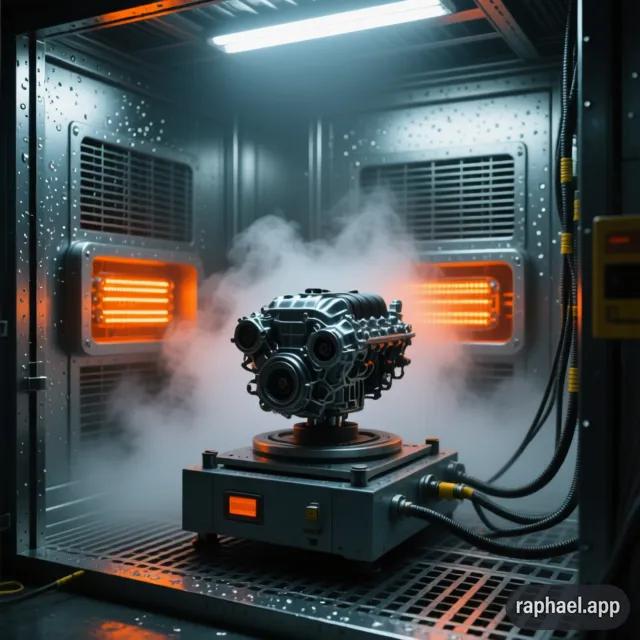
An environmental test chamber is a controlled enclosure that simulates specific environmental conditions such as temperature, humidity, altitude, vibration, or even salt spray. By placing products inside these chambers, manufacturers can test how they react to stress, ensuring safety and long-term reliability.
Why Are Environmental Test Chambers Important?
Product Reliability – Ensures items can withstand real-world use.
Compliance Testing – Meets international standards like ISO, ASTM, and MIL-STD.
Risk Reduction – Identifies defects early, preventing recalls.
Cost Efficiency – Saves money by reducing warranty claims and production errors.
Customer Trust – Builds confidence in product performance.
Types of Environmental Test Chambers
Different industries use various types of test chambers depending on their requirements:
1. Temperature Test Chambers
Replicate extreme heat or cold. Common in electronics, automotive, and aerospace industries.
2. Humidity Chambers
Control moisture to test corrosion, swelling, and material resistance.
3. Thermal Shock Chambers
Quickly alternate between hot and cold to test rapid climate changes.
4. Vibration Test Chambers
Combine mechanical vibrations with environmental stress to test durability.
5. Altitude Chambers
Simulate low-pressure environments for aviation, defense, and aerospace testing.
6. Salt Spray Chambers
Check for corrosion resistance, widely used in marine and automotive industries.
Industries That Use Environmental Test Chambers
Electronics: Ensuring devices function in varied climates.
Automotive: Testing components like engines, batteries, and sensors.
Aerospace & Defence: Simulating high altitude and rapid environmental changes.
Pharmaceuticals: Conducting stability testing of drugs and packaging.
Renewable Energy: Testing solar panels and wind turbine parts under harsh conditions.
Trends in 2025
Environmental testing technology is evolving rapidly. Some key innovations include:
AI-Powered Monitoring – Smarter analysis for predictive results.
Energy-Efficient Chambers – Reduced operational costs.
Compact & Modular Designs – Flexible setups for labs and production facilities.
IoT Integration – Remote monitoring and control of testing conditions.
Final Thoughts
In a world where reliability defines success, environmental test chambers are no longer optional—they’re essential. They not only help businesses meet compliance requirements but also ensure that products are safe, durable, and trusted by customers.
For industries across electronics, automotive, aerospace, and pharma, investing in advanced environmental testing is a step toward quality excellence and long-term growth.


Write a comment ...