Introduction
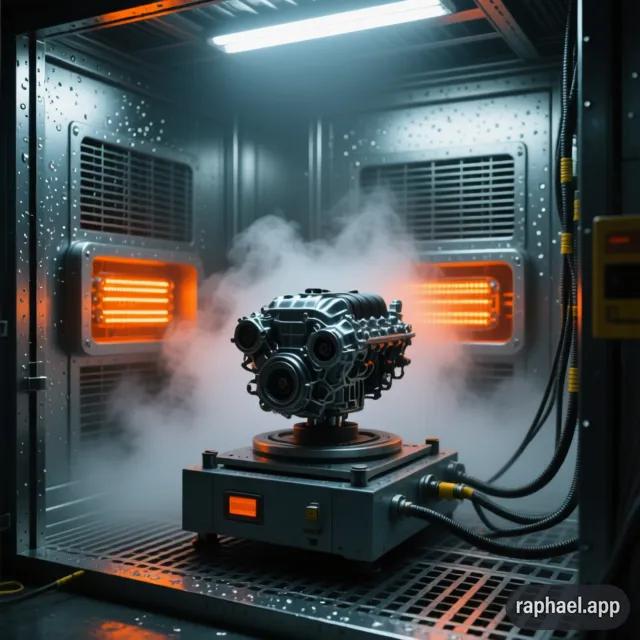
As Indian manufacturing moves toward higher precision and global competitiveness, quality testing has become a core requirement rather than a final checkpoint. One of the most important tools supporting this shift is the Environmental test chamber in India. These systems help manufacturers validate product performance by recreating real-life environmental conditions inside a controlled laboratory setting.
Understanding Environmental Testing
Environmental testing evaluates how a product reacts to stress factors such as temperature changes, humidity levels, corrosion, and pressure variations. By simulating these conditions early in the product lifecycle, manufacturers can identify potential failures before mass production begins.
Environmental test chambers make this process repeatable, measurable, and compliant with international standards.
India’s Shift Toward Advanced Quality Testing
With the rise of initiatives like Make in India and increased export-driven manufacturing, Indian industries are adopting stricter quality benchmarks. Environmental test chambers are now widely used in R&D centers, production facilities, and independent testing labs to ensure products meet both domestic and global requirements.
Key reasons for increased adoption include:
Export compliance and certifications
Reduced product recalls
Improved customer satisfaction
Faster innovation cycles
Applications Across Indian Industries
Automotive & Electric Mobility
Environmental chambers are used to test EV batteries, power electronics, wiring harnesses, and plastic components under heat, cold, and moisture conditions.
Electronics & Semiconductor Sector
Chambers help validate circuit boards, connectors, and components against thermal stress and humidity-induced failures.
Pharmaceutical & Biotechnology
Stability testing of drugs and medical devices relies heavily on precise temperature and humidity control.
Defence, Aerospace & Railways
Critical systems are tested for extreme environmental endurance to ensure safety and reliability.
Energy & Infrastructure
Solar modules, control panels, and industrial equipment undergo long-term environmental exposure tests.
Common Environmental Test Chamber Configurations
Indian manufacturers typically deploy:
Programmable temperature chambers
Temperature and humidity combined chambers
Rapid thermal cycling chambers
Salt fog and corrosion chambers
Customized walk-in chambers for large components
Each configuration is selected based on application-specific testing needs.
Advantages for Indian Manufacturers
Using environmental test chambers helps businesses:
Detect design flaws early
Extend product lifespan
Improve compliance with ISO, IEC, and ASTM standards
Lower maintenance and replacement costs
Strengthen brand reputation in global markets
Factors to Consider Before Investing
Before purchasing or upgrading an environmental test chamber, companies should evaluate:
Test accuracy and repeatability
Chamber capacity and scalability
Local service availability in India
Software control and data logging features
Long-term operational efficiency
A strategic investment ensures consistent testing results and long-term value.
The Road Ahead
The future of environmental testing in India points toward smarter systems with automation, remote monitoring, and energy-efficient designs. As sustainability and digital manufacturing gain momentum, environmental test chambers will continue to evolve alongside them.
Conclusion
Environmental test chambers are no longer limited to high-end research labs—they are now a necessity for Indian manufacturers aiming for durability, compliance, and global trust. By integrating advanced environmental testing into production workflows, businesses can confidently deliver products built to perform under real-world conditions.


Write a comment ...