In today’s global marketplace, quality is no longer a differentiator—it’s a baseline expectation. For Indian manufacturers aiming to compete internationally, the real advantage lies in delivering products that perform consistently across unpredictable environments. This is where environmental test chambers are making a measurable impact.
Beyond Testing: A Strategic Business Tool
Environmental test chamber in India are often seen as technical equipment used during product development. However, forward-thinking companies in India are beginning to view them as strategic assets.
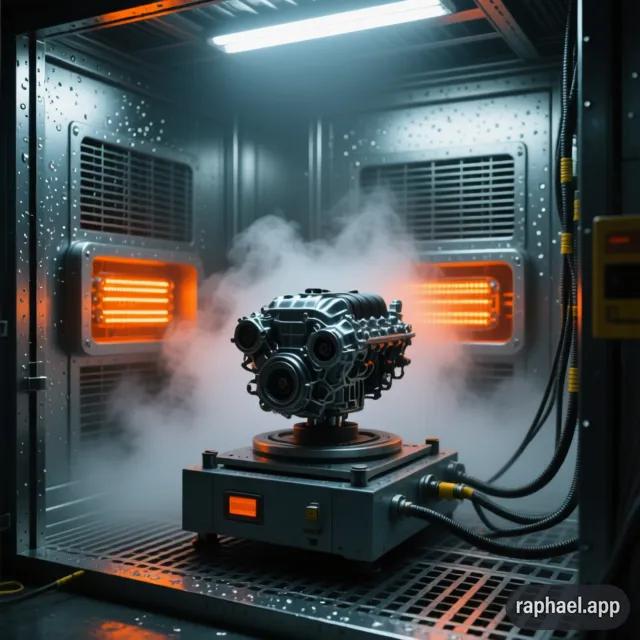
By simulating extreme conditions—such as high temperatures, humidity, and rapid climate changes—these chambers help businesses move from reactive problem-solving to proactive quality assurance. Instead of fixing issues after product launch, manufacturers can eliminate them before they occur.
India’s Unique Environmental Challenge
India’s geographic and climatic diversity presents a significant challenge for product reliability. A device that works perfectly in a controlled lab environment may fail when exposed to coastal moisture or intense inland heat.
Environmental test chambers allow manufacturers to replicate these diverse conditions in a controlled setting, ensuring products are truly market-ready across regions—not just theoretically tested.
Reducing Risk, Increasing Confidence
One of the biggest hidden costs in manufacturing is product failure after launch. Returns, warranty claims, and brand damage can quickly erode profits.
Environmental testing helps mitigate these risks by:
Validating product performance under stress
Identifying design weaknesses early
Ensuring consistency across production batches
Building confidence among stakeholders and customers
Enabling Faster Innovation Cycles
Speed is critical in modern manufacturing. Companies that can innovate and launch products faster gain a clear competitive edge.
With environmental test chambers, testing cycles become more efficient and repeatable. Engineers can quickly validate multiple design iterations, reducing time-to-market without compromising on quality.
Industry Adoption Is Accelerating
Across India, industries are increasingly integrating environmental testing into their core processes:
Electric vehicle manufacturers testing battery resilience
Electronics companies validating device durability
Pharma firms ensuring drug stability
Aerospace sectors meeting strict compliance standards
This widespread adoption highlights a broader shift—from optional testing to essential validation.
The Future: Smarter, Data-Driven Testing
The next evolution of environmental testing lies in data. Modern chambers now come equipped with sensors, automation, and analytics capabilities that provide real-time insights.
This data-driven approach enables predictive analysis, helping companies anticipate failures before they even occur—further strengthening product reliability.
Conclusion
Environmental test chambers are no longer just part of the testing phase—they are becoming central to business strategy. For Indian manufacturers, they offer a clear path to reducing risk, accelerating innovation, and competing confidently on a global stage.
In a world where performance defines reputation, testing is no longer a step—it’s the foundation.


Write a comment ...